The Clunk After the Crater: Catching Pothole Damage Before the Big Bill

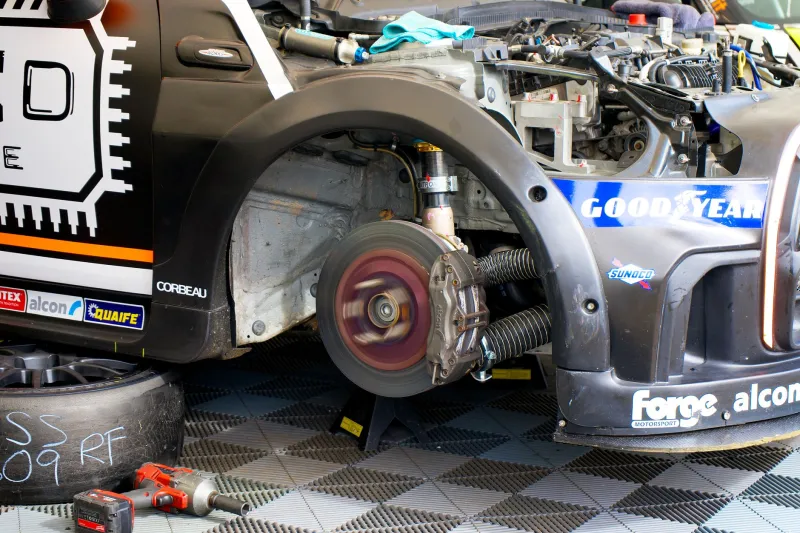
Photo: car suspension inspection on garage ramp pothole damage UK, via s3files.core77.com
Potholes have a way of announcing themselves after the fact. You hear a thud, wince, mutter something unrepeatable and drive on. Then, for the next fortnight, you find yourself listening for noises that may or may not be there. Most pothole strikes are just that — a strike. But the damage from a bad one often develops quietly, and the bill grows while you wait for a warning light that will never appear.
This is the pothole tax in practice: not the council claim form, but the slow accumulation of bruised tyres, tired bushes and knocked-out geometry. Here is how to catch it early, what a garage will actually check, and how to keep the quote from snowballing.
Start with the tyre, because it is the cheapest clue
A pothole can bruise a tyre without puncturing it. Look at the sidewalls, especially the inner and outer faces, for a bulge, a cut or a graze. A bulge means the internal structure has been damaged; that tyre needs replacing, not monitoring. Check the wheel rim for a flat spot or a crack, and check pressures when the tyres are cold. If the car starts vibrating at motorway speed after a hit, suspect a buckled wheel, a thrown wheel balance weight or a tyre that has shifted on the rim. A quick tyre check is cheap. Ignoring a sidewall bulge is not.
Note the noises, but do not diagnose from the driver's seat
A new clunk over speed bumps is a classic early sign. It often points to anti-roll bar links, worn bushes or a tired top mount, though it can also be a loose exhaust heat shield or something rattling in the boot. A single knock when you turn the wheel or brake can suggest a ball joint or track rod end. A drone that rises with road speed may be a wheel bearing, which potholes can hasten but rarely cause alone. Write down when the noise happens: cold or warm, turning left or right, over bumps or under braking. That little log is genuinely useful to a technician.
Steering that has lost its manners
After a solid impact, the steering wheel may sit slightly off-centre when you are driving straight. The car might pull to one side, feel vague around the straight-ahead, or wander on uneven roads. Some of that can be alignment, but alignment is not always the whole story. If a track rod end, wishbone bush or ball joint has been damaged, simply resetting the geometry can hide the symptom and accelerate tyre wear. Ask the garage to check for play first, then align.
Uneven tyre wear is the paper trail
Potholes and battered roads leave evidence on the tyres. Inner or outer edge wear can indicate camber or toe problems. Scalloped or cupped patches can point to worn suspension components or dampers that are no longer controlling the wheel properly. Run your hand across the tread — carefully, because steel cords hurt — and look for high and low spots. If one tyre is worn oddly, do not just replace it and carry on. Find out why.
What a garage should actually check
A proper inspection is not a two-minute glance in the car park. On a ramp, a technician should look for shock absorber leaks, broken or corroded springs, split bushes, bent control arms and damaged subframe mounts. They should check ball joints and track rod ends for play with a pry bar or by hand, spin the wheels to listen for bearing noise, and check the tyres for run-out and sidewall damage. A road test matters too, because some knocks only appear under load or over a certain kind of bump. If the garage sells tyres and alignment, make sure the suspension check comes before the alignment quote.
Urgent, due soon, monitor
Not every finding needs fixing this week. A sensible garage will separate the list. Urgent items include a tyre with a sidewall bulge or cut, a cracked or badly buckled wheel, a broken spring, a leaking shock absorber that is affecting handling, and any excessive play in a ball joint or track rod end. Due-soon items might include worn bushes with mild symptoms, a slightly bent wheel that balances but is not ideal, or alignment after a repair. Monitor items are the ones with no safety impact and no rapid wear — but they still need a note in the service record and a recheck at the next visit.
How to ask for a quote without being upsold
Ask for the quote itemised: parts, labour and VAT, with part numbers where possible. Then ask the technician to sort the findings into safety critical, due soon and monitor. A good garage will be happy to do this; it protects both of you. If the quote runs to four figures, ask whether a complete assembly is genuinely needed or whether a bush, link or joint can be replaced on its own. Ask for the old parts back if you want to see what failed. And if you are unsure, a second inspection is not an insult — it is normal consumer sense.
Keep the pothole paperwork
If you hit a particularly bad crater, note the location and date, photograph the pothole and the damage, and report it to the local council. Keep repair receipts. It will not guarantee compensation, but it makes any claim far less muddled. More importantly, it gives you a record of when the problem started.
Potholes are a fact of UK driving. A four-figure suspension bill does not have to be. Catch the clunk, the wander and the odd tyre wear early, ask for a clear itemised report, and let a trusted local garage tell you what is urgent rather than what is merely profitable.