Old Bits, New Trust: The Case for Reclaiming Your Replaced Car Parts
Most of us hand over the keys, listen to the verdict, pay the bill and drive away. The old alternator, the worn brake pads or the catalytic converter that failed its emissions test disappear into the garage's scrap corner. You rarely see them again. But asking for the parts that came off your car is not a strange request, and it is not an accusation. It is a simple way to keep a repair transparent, get a little scrap value back and have something concrete to look at if a question arises later.
Why anyone would want a box of old car parts
Sometimes it is curiosity. Sometimes it is evidence. Sometimes it is money. A catalytic converter contains precious metals and can be worth real scrap value. An old battery has value as lead. Even a worn brake disc can tell a story about how the car was driven and whether the wear lines up with the mileage. None of that makes you a detective. It just means you are taking an interest in the thing you paid for.
When the request is perfectly reasonable
If you are paying for a new part, the old one was yours before the job started. In the ordinary run of things, a garage replacing your brake pads or alternator is not buying those old parts from you. They are removing them. So asking for them back is a fair starting point, especially if you ask before the spanners come out.
The best way is to put it in the booking. Something like: please keep the old parts for me unless they need to go back for warranty or core exchange, and note it on the job sheet. That gives the garage time to plan. It also avoids the awkward scene at collection, when the old parts may already be in the scrap bin or on a returns pallet.
The catches: core exchange, warranties and safety
There are legitimate reasons a garage may need to keep what came off your car. The big one is core exchange. Many replacement parts, including alternators, starter motors and sometimes catalytic converters, are sold with a surcharge. The supplier refunds that surcharge when the old unit is returned, so the garage can rebuild or recycle it. If you want to keep the old part, you may be asked to pay the core charge. That is not a con; it is how the part was priced. Ask about it before the work starts so there are no surprises.
Warranty is the other common exception. If a part fails and is being replaced under a supplier warranty, the old component often has to go back for inspection. The same can apply to some manufacturer or extended warranty claims. In that case, ask the garage to note on the invoice that the old part was returned for warranty, and ask for the part number and a photo if you are curious. A paper trail is useful.
Then there is safety and disposal. Old batteries, brake fluid, fuel filters and some contaminated components are controlled waste. A garage may not be able to hand them over for you to put in the boot, and it may need to use a licensed waste carrier. Catalytic converters are a different case and are often returnable, but rules and practicalities vary. If the garage says it cannot release an item, ask why. A clear answer about warranty, core exchange or hazardous waste is reassuring. A vague shrug is less so.
What the old parts can tell you about the invoice
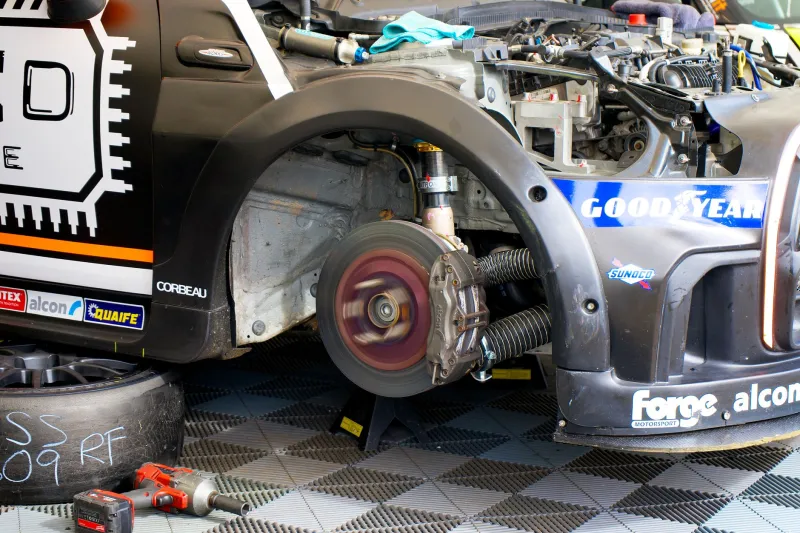
This is where the box of old bits earns its keep. You do not need to be a mechanic to check a few basics. Look at the part number on the old unit and compare it with the invoice. Check whether the wear looks consistent with what you were told. If you were charged for new brake pads, the old pads should look worn, not nearly new. If a suspension arm was replaced because of play, the old joint may show movement or a split boot. If a catalytic converter was swapped after an emissions failure, the old unit should match the story.
That is not an invitation to march into the workshop waving a spanner. It is a way to ask a calm, specific question if something does not add up. A good garage will happily explain. If the old part is missing because of a core exchange or warranty return, the invoice note and part number should cover that. The point is not to catch anyone out. It is to make the repair easier to understand.
How to ask without making it weird
Keep it light and practical. At booking, say you would like the old parts kept unless there is a warranty or core-exchange reason. At collection, ask for them in a box or a sturdy bag. Do not leave oily bits cluttering the garage's yard for a week; collect them when you pick up the car or agree a sensible time. If you decide you do not want them after all, ask the garage to dispose of them properly rather than dumping them in your wheelie bin.
It also helps to remember that old parts are not a discount lever. A garage is not usually making a fortune from your worn brake pads. The scrap value of a catalytic converter can be useful, but scrap prices move around and the garage may have already priced the job around a core exchange. If you want the scrap value, take the part and deal with it yourself. If you want the garage to keep it, do not expect a line of credit on the invoice.
The bottom line
Asking for what came off your car is a fair, normal request. It keeps the repair transparent, gives you something to inspect and can put a few pounds in your pocket if there is scrap value. Just ask early, accept the genuine warranty and core-exchange exceptions, and be sensible about hazardous waste. A trusted local garage will not be offended. If anything, it shows you are engaged with the car, and that is usually a good thing for both sides.