Red, Amber, Green: A Calm Guide to What Your Dashboard Is Actually Telling You
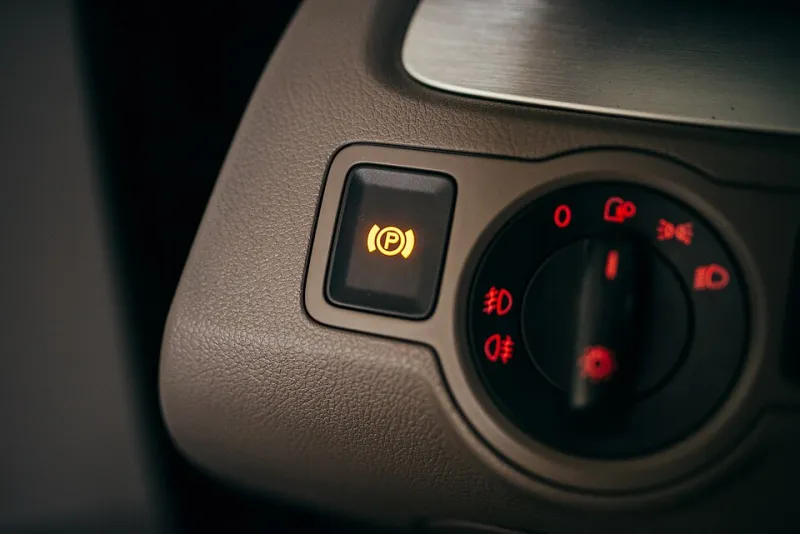
Photo: Shixart1985, CC BY 2.0, via Wikimedia Commons
Cold morning, key in, and the dash lights up like a fruit machine before settling down. Most of those go out. The one that stays on is the one that matters. Here's how to read it without panicking — and without paying for a recovery truck you didn't need.
First, the two-second rule
When you turn the ignition (or press start), every warning light should illuminate briefly as a self-test. If one doesn't come on at all, that's its own fault — a dead LED, or a previous owner who's been creative with black tape. Worth noting either way.
Once the engine catches, everything except the handbrake and maybe the seatbelt reminder should extinguish within a few seconds. Anything still glowing after that is talking to you, and it isn't making small talk.
Red means stop. Not "stop soon". Stop
Red is the car telling you something is being damaged right now, on your drive, at your expense.
- Oil pressure (oil can symbol) — engine off as soon as it's safe. Low oil pressure can destroy a bottom end in minutes. Check the level once it's cool. If it's full and the light is still on, don't restart it; that's a sensor or a failing pump, and both need a professional.
- Coolant temperature or level — pull over and let it cool for at least 20 minutes before you go near the header tank cap. Opening a hot cooling system is how people end up in A&E on a Sunday.
- Brake warning (circle with an exclamation mark, or the word BRAKE) — could be the handbrake left on (embarrassing but free), low fluid (usually a leak), or a fault. If the pedal feels long or spongy, stop.
- Battery/charging symbol — the alternator has probably given up and you're running on borrowed electrons. Kill the heated seats, radio and anything else you don't need, and head somewhere you can safely stop. You've got maybe 20 to 30 minutes.
- Red stop symbols on modern cars — if the manufacturer says stop, stop. Read the handbook before you need it, not while you're on the hard shoulder.
Amber: the light that costs you money if you ignore it
Amber is the interesting one. It isn't an emergency, which is precisely why people leave it for six weeks and turn a £90 job into a £900 one.
- Engine management light (EML) — steady amber is usually emissions or a sensor. Flashing amber means stop driving, because that's a misfire dumping unburnt fuel into a catalytic converter. A £40 code read at a decent local garage beats guessing on a forum.
- DPF light — the diesel particulate filter is loading up. A steady 50–60mph motorway run for 20 minutes may clear it. If it returns within a week, you're doing too many short trips for a diesel and the filter is politely telling you so.
- AdBlue warning — top it up. Ignore it and the car will eventually refuse to restart. Not a breakdown, a design feature.
- Tyre pressure light — check all four with a gauge at a forecourt. Don't just press the reset button and feel virtuous. Pothole season means this one earns its keep.
- ABS light — the car will still stop, just without anti-lock assistance. Fine to drive gently to a garage, not fine to leave for months.
- Traction control / ESP light — often the same wheel speed sensor as the ABS. Same advice.
- Brake pad wear indicator — you've got a few hundred miles of ordinary driving. Book it in this week.
- Glow plug light on a diesel — flashing can mean a fault; steady on a cold morning is normal behaviour.
Green and blue: you're in charge of those
Green is confirmation, not warning: indicators, sidelights, fog lights, cruise control, lane assist. Blue means main beam. Front fogs show green, rear fogs show amber on the switch — and leaving a rear fog on in ordinary rain is both illegal and genuinely dazzling to the person behind you. If you can't tell your rear fog from your brake light, spend five minutes with the handbook. Cheapest motoring skill going.
The phone call that saves you money
When you ring a garage, you'll get a far better outcome if you've got three things ready:
- The exact symbol — describe it precisely or photograph it. "An orange circle with a squiggle" tells them more than "a light came on".
- When it appeared and whether it's steady or flashing — cold start, after ten miles, over a bump, in the wet.
- How it's driving — any misfire, limp mode, smell, noise, or a sudden change in fuel economy.
Then ask them: Can you read the codes before I book it in? Is it safe to drive there, or should I get it recovered? What's the diagnostic charge, and does it come off the repair bill? Will you call me before doing any work? A good independent will answer all four without huffing at you.
The mistakes that turn amber into red
Clearing the code by disconnecting the battery. Sounds clever. It also resets the readiness monitors, which is exactly what an MOT emissions test needs to be complete. Turn up with an unset system and you may get a fail or an aborted test — and you've learned nothing about the actual fault.
Ignoring a brake wear light because "it still stops". It does, until the pad backing is grinding the disc, and now you're buying discs as well as pads.
Treating the tyre pressure light as a nuisance. Slow punctures from a nail are common. A tyre running 15psi down handles badly in the wet and cooks itself on the motorway.
Waiting for the MOT to deal with it. The MOT is an annual safety check, not a service plan. It won't fix the fault; it'll just tell you it's there — and possibly relieve you of the car for a few days.
The bottom line
Your dashboard is one of the few things on the car that's genuinely on your side. Red gets a stop. Amber gets a booking. Green gets a nod. And anything that flashes gets priority over whatever's on the radio.