The Driveway Dormancy Test: What a Fortnight Parked Really Does to Your Car

Photo: Diego Delso, CC BY-SA 4.0, via Wikimedia Commons
Leaving a car parked for a fortnight feels like the least dramatic thing you can do with it. You lock up, head off on holiday or a work trip, and expect everything to be exactly where you left it. Most of the time it is. But two weeks is long enough for a few small things to drift out of shape, especially in a damp UK winter, and long enough for a weak component to reveal itself.
The good news is that a fortnight is rarely catastrophic. The bad news is that the internet has turned this into a festival of half-truths about flat batteries, seized brakes and fuel going off. Here is the practical version for anyone leaving a car at home over the 2026 festive break or a long trip.
What two weeks actually does to a battery
A modern car never truly switches off. The alarm, central locking, clock, radio memory and various control modules all nibble at the battery. That parasitic drain is small, but it adds up. A healthy battery in a healthy car will usually shrug off two weeks without complaint. A battery that is already five or six years old, or one that has been doing lots of short trips, may not.
The result is not always a completely dead car. Sometimes it is a slow, grumpy crank, a dash full of warning lights, or a central locking system that feels half-hearted. If you know your battery is long in the tooth, either take the car for a decent run before parking it or use a smart trickle charger if you have power nearby. Do not simply leave it idling on the drive for twenty minutes and call it charged; that is not the same as a proper drive.
Brakes: the damp-weather sticking point
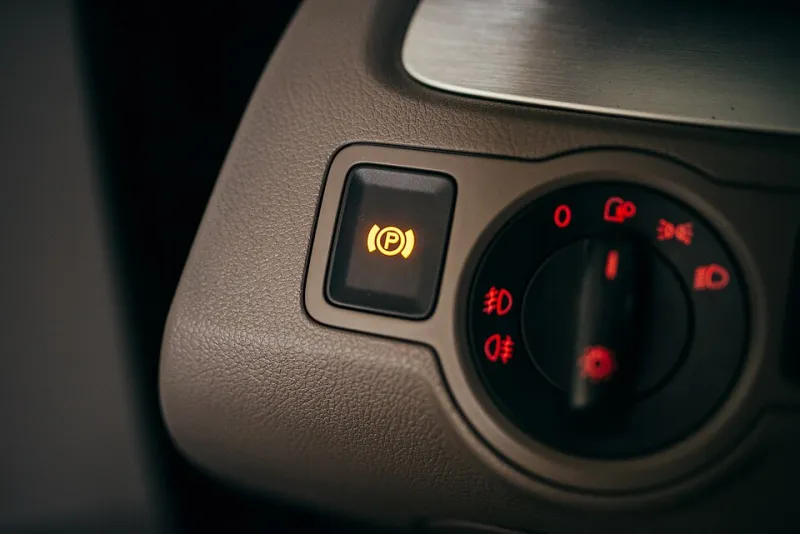
This is the one that catches people out most often in the UK. Park a car after a wet drive, leave it for a fortnight with the handbrake on, and there is a fair chance the rear brakes will feel sticky or noisy on first use. That is not necessarily a failure. It is often a light film of rust on the discs and pads, made worse by damp air and a handbrake holding everything tight.
If you are parking on a level driveway, leave the car in gear if it is manual, or in Park if it is automatic, and use a chock rather than leaving the handbrake clamped on for a fortnight. If you must use the handbrake, expect a small clunk or a bit of scraping on the first few stops. Usually it clears. If a wheel is genuinely dragging, the car pulls to one side or a brake smells hot, that is a garage job rather than a case of drive it off.
Tyres and flat spots: less drama than the forums suggest
Two weeks is not long enough to give most tyres a permanent flat spot. That is a myth borrowed from cars left standing for months or years. What two weeks can do is expose a tyre that was already low on pressure. Cooler weather lowers tyre pressures anyway, and a soft tyre sitting in one position for a fortnight can look and feel unhappy when you pull away.
Before you park, check the pressures cold and inflate to the recommended figures in the handbook or door pillar, not the maximum on the sidewall. If the car will sit on a driveway, park it straight rather than with the wheels turned hard. On return, check the pressures again before you set off. A brief thrum for the first mile or two is common; a persistent vibration is not, and that is worth investigating.
Fuel, fluids and the condensation myth
You will hear that a car left with a low tank will fill up with condensation and ruin the fuel system. For a fortnight, that is mostly internet folklore. Modern fuel systems are sealed far better than old ones, and two weeks is not enough for fuel to go stale in any meaningful way. A petrol car may be a little harder to start if it has been sitting, but it is not a reason to panic.
That said, leaving the tank with a reasonable amount of fuel is sensible for practical reasons. It gives you options if you return to a flat battery and need to walk to a garage for help, and it avoids any worry about the low-fuel light adding to your problems. Check coolant, oil and screenwash before parking, and top up the screenwash with a proper winter mix. There is no need for special fuel additives for a two-week sit.
Tax, insurance and the paperwork nobody checks until later
If the car is staying on a public road, it needs to be taxed, insured and have a valid MOT. Continuous insurance rules still apply, and a fortnight parked on the street is not a loophole. If it is on a private driveway, the rules are different, but do not assume you can simply cancel the insurance and leave it there without checking what your policy requires.
SORN is not usually worth the admin for a fortnight unless the car is off the road for a longer period and you are certain it will not be used. Before you travel, note the MOT expiry date and check that your breakdown cover is current. It is far easier to sort those things from the sofa than from a rainy airport car park on your return.
The ten-minute pre-parking routine
Wash and dry the car if you can, especially the brakes and arches. Park it on level ground, straighten the wheels and leave the handbrake off if it is safe to do so. Put a chock behind a wheel, leave a manual in gear or an automatic in Park, and close the windows and sunroof properly. Inflate the tyres to the correct pressures, top up the screenwash, and give the battery a fighting chance with a run or a trickle charger.
Take a photo of the dashboard and the mileage if you are the forgetful type. Lock the car, keep the keys away from the car if it has keyless entry, and make sure you have not left anything inside that will smell interesting after two weeks. That is it. No elaborate ritual, no need to disconnect the battery unless the handbook says so.
On return: what to check before you drive
Do a quick walk-round before you get in. Look at the tyres, check for obvious leaks, and make sure the car is sitting level. Unlock it and see how the central locking and interior lights behave. If it starts, let it settle for a few seconds and watch for warning lights that stay on. Drive gently for the first few miles, braking early and lightly to clean up the discs, and listen for anything that does not sound like normal rust clearing itself.
A fortnight parked is a good test of a car's underlying health, but it is not a reason to expect disaster. If the battery struggles, the brakes drag or a tyre will not hold pressure, those are useful warnings rather than surprises. Deal with them before they become a bigger bill, and the driveway dormancy test becomes exactly what it should be: a quiet fortnight, not an MOT by ambush.