Paying for Answers: Making Sense of Garage Diagnostic Charges
Your car has developed a wobble, a warning light or a habit of cutting out at the worst possible moment. You ring the garage, and before anyone has lifted the bonnet you are told there will be a diagnostic charge. It might be £60, £90, or more. Suddenly you are paying for answers rather than repairs, and it is easy to feel uneasy about that.
On the whole, a diagnostic fee is not a con. It is payment for time, equipment and expertise. But like any garage charge, it deserves a clear explanation. The trick is knowing what proper diagnosis involves, when a fee is reasonable, and how to avoid paying for the same investigation twice.
A fee is not automatically a fob-off
A modern car is not a simple mechanical object. It has several electronic control units, sensors, wiring looms and software systems, and the fault you notice may be several steps removed from the part causing it. A technician has to work through that maze.
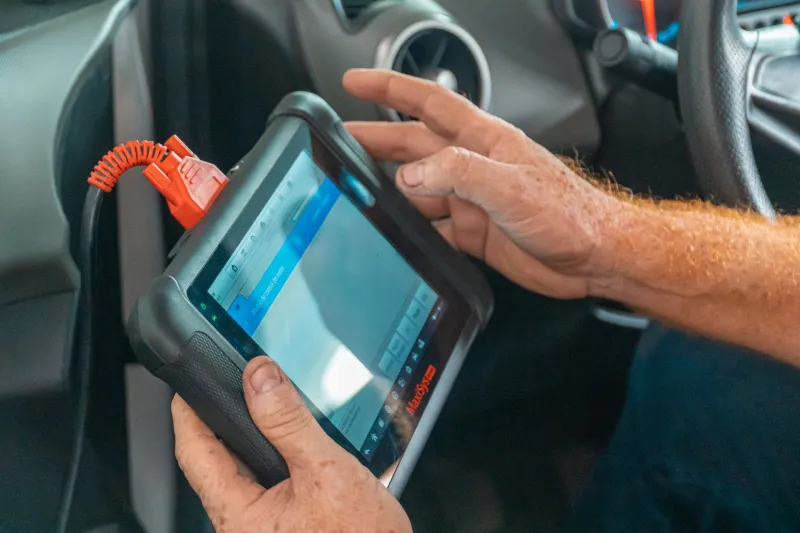
A diagnostic charge usually covers a few things: the technician's time, access to manufacturer technical data, subscriptions for diagnostic software, the use of workshop equipment, road testing, and the thinking required to turn a set of readings into a sensible repair plan. The scanner itself is only one tool in that process.
That does not mean every diagnostic fee is fair value. If a garage cannot tell you what the fee includes, how long it covers, or what you will receive at the end, ask more questions before you agree.
Code reading is not the same as fault-finding
This is where a lot of confusion starts. A basic code reader can be bought for very little and will pull fault codes from the car. Those codes are useful, but they are not a diagnosis. A code such as P0420 or a cylinder misfire code tells you which system or circuit has noticed a problem. It rarely says 'replace this exact component'.
Proper fault-finding means testing the circuit, checking live data, inspecting wiring and connectors, comparing readings against known good values, and following the manufacturer's test plan. A misfire could be a spark plug, a coil pack, an injector, a wiring fault, low compression or something else entirely. Fitting parts until the light goes out is guesswork — and guesswork is what proper diagnosis is meant to avoid.
That is why a garage may charge an hour or more just to investigate. They are not simply plugging in a machine and reading a message.
When a diagnostic charge looks fair
A diagnostic fee tends to be reasonable when the fault is intermittent, when several systems are involved, when the car needs a road test, or when the garage has to use specialist equipment and follow complex test procedures. Some jobs also require security access or coding, which adds time and cost.
It can also be fair for a garage to charge for diagnosis even when no fault is found. That sounds annoying, but the time was still spent. The important thing is that you agreed the scope beforehand and received a written explanation of what was checked.
When to ask harder questions
Be cautious if the diagnostic charge is vague, if you are quoted a fee per system with no upper limit, or if the garage cannot say what you will get for the money. Be especially careful if the same fault returns shortly after a repair and you are immediately charged again to investigate the same thing.
That does not mean you should refuse to pay for diagnosis. It means you should agree the terms before the work starts. A good garage will not be offended by a few sensible questions. Most would rather have the conversation upfront than deal with a dispute later.
What to ask before you say yes
Before authorising diagnostic work, confirm the basics in plain English:
- Is the diagnostic fee fixed, or is it an hourly rate? If hourly, what is the likely maximum?
- What does the fee include — a road test, live data, wiring checks, a written report?
- Will the diagnostic fee be taken off the repair bill if I go ahead with the work?
- Will I receive the fault codes and a summary of the tests carried out?
- If the same fault comes back within a reasonable period, will you recheck it without charging me again?
- Are there extra charges for programming, coding or security access?
You do not need to interrogate the person on the phone. A short, friendly confirmation is enough. The aim is a shared understanding, not a standoff.
A simple script that keeps things calm
If you are unsure how to phrase it, try something like this:
'I am happy to pay for a proper diagnosis, but before you start could you confirm the diagnostic fee and what it covers? If I go ahead with the repair, does the fee come off the bill? Could you note the fault codes and tests on the invoice? And if the same fault returns, what is your policy on rechecking it?'
That approach shows you are serious about maintaining the car without pretending the garage should work for free. It also gives you a paper trail if anything needs sorting out later.
How to avoid being charged twice
Keep the diagnostic report. If a garage has done the work properly, the findings are valuable. They tell the next technician what has already been checked, which can save time and money.
Authorise diagnosis and repair in stages. Let the garage investigate, explain the findings, and quote the repair. If you then choose to go ahead, ask how the diagnosis proves the recommended part is at fault. A decent technician will explain the reasoning without taking offence.
And if a fault returns after a repair, ring the garage promptly and calmly. Ask whether it is covered by their recheck policy. Most garages will want to put right a repair that has not solved the problem. What is less reasonable is expecting free diagnosis for a completely new symptom or a different fault.
The bottom line
A diagnostic fee buys thinking time, testing and expertise. It is not simply a charge for plugging in a scanner. Ask what the fee covers, get the scope agreed, and keep the written findings. Do that, and you can pay for diagnosis once — rather than paying for the same guesswork twice.